Method · Reference
Crossing desk
You are the gate. Each crossing asks to go live: hold it, probe it small, or pass it. Evidence comes back only for what you act on, and some of what you pass cannot be taken back.
In Measured mode every card is a real crossing, measured on 21 October 2026: an audio master through a real encoder, graded by ffmpeg's EBU R128 scanner (ITU-R BS.1770 true peak), or an exact value through a real number format, graded by exact rational arithmetic. Model world is invented and illustrates mechanics that are not measured. Probes, audits, pressure and energy are game mechanics in both. Each crossing carries a label: what it is, what it isn't, and where the resemblance stops. The page shows counts, never a score.
Latitude -33.8688 through float16: relative error within 0.001
House rule: format precision within tolerance is safe. It says PASS
- Structure
- UNTESTED
Label: what this is, what it isn't, where the resemblance stops
- What this is
- The exact relative error after one round trip of Latitude -33.8688 through float16, checked against a tolerance of 0.001 with exact rational arithmetic.
- What it isn't
- A test of arithmetic done after decoding, of error building up over many steps, or of any value other than this one.
- Where it stops
- One value is converted once; real float16 use moves whole tensors through many operations, where error accumulates. The tolerance is a chosen example, not a requirement from any real system.
- Harm units
- Harm is one plus the log of error over tolerance, capped at 6, and 6 for overflow. That scale is the game's choice.
Ledger
No crossings yet. The first decision starts the record.
The frozen deck
546 crossings: 378 audio (six synthetic masters at seven levels through MP3, AAC, Opus, Vorbis and FLAC) and 168 numeric (fourteen exact values through float16, bfloat16, float32, JSON, text and int8 at two tolerances). In those records the audio house rule, true peak at or below −1 dBTP before encoding, approves 279 crossings and 42 of them fail when measured; the numeric rule approves 84 and 7 fail, all from float16 range limits. FLAC, the lossless control, changed true peak by 0.0 dB on every crossing.
- deck.v1.json, the compiled deck with every card's label
- audio_crossings.json and numeric_crossings.json, the measurements with SHA-256 hashes and tool versions
- measure_audio.py, measure_numeric.py and build_deck.py, to reproduce them
- MANIFEST.json, the hash of every file above
A second run from scratch reproduced every measured value and every master exactly. Opus and Vorbis file hashes differ between runs because the Ogg container assigns a random stream serial. Results depend on the encoder build.
Reference · perception track, version 1 · not dealt in the game
When appearance and measurement come apart
A third substrate. The house rule is trust how it looks; the oracle is a ruler applied to the rendered pixels. 72 figures, drawn by the deck’s own generator from classic constructions. On the measurable figures the ruler can say the look is right (22), wrong (23), or that the difference is too small to resolve (15). On the bistable figures the claim asks for a fact the drawing does not contain, so the correct answer is UNRESOLVED (12): both readings are warranted, and choosing one is the error.
A look is a completion: the figure is filled in from partial cues and prior experience, and the result arrives feeling like an observation. The ruler is a check against the rendered pixels and nothing else. The cards mark where completion and check agree and where they come apart; none of them measures how often a person is fooled (NC-37).
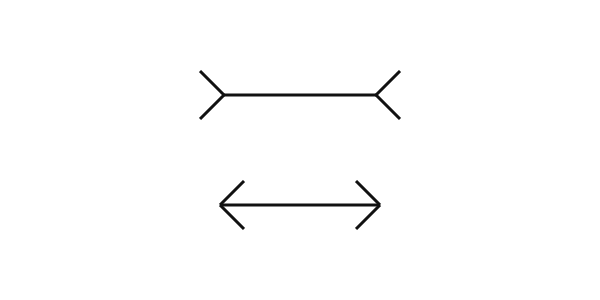
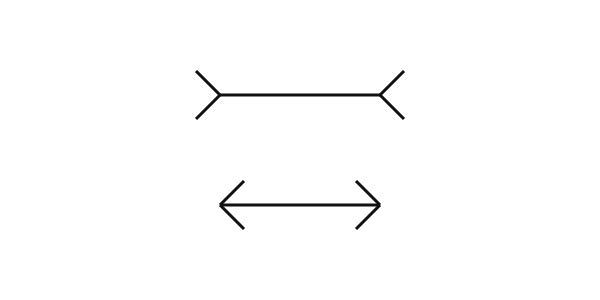
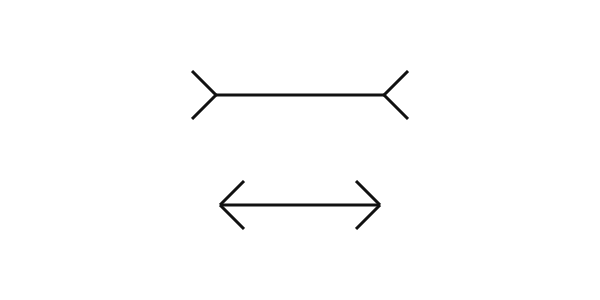


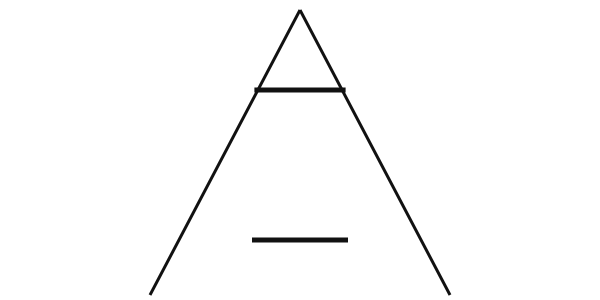
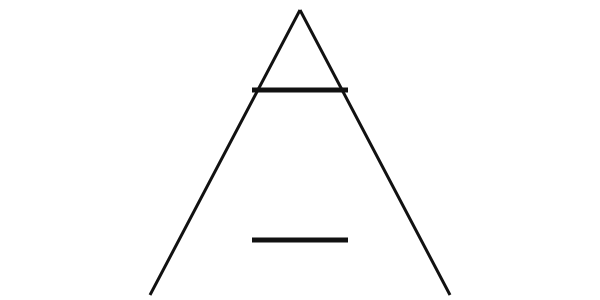


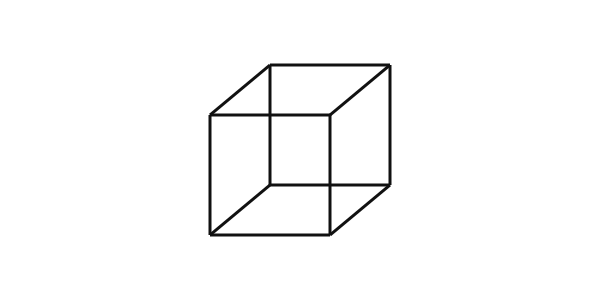
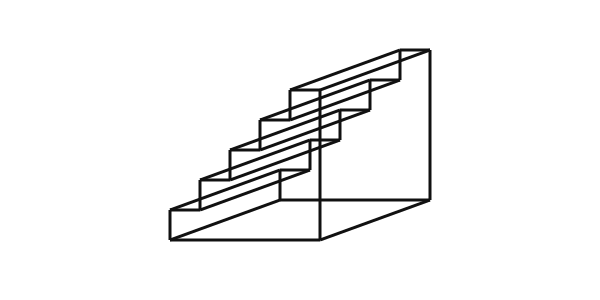
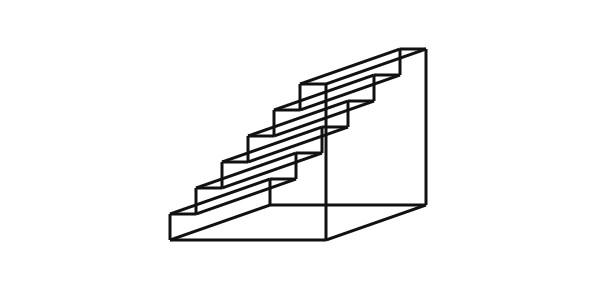
The counts are set by the author’s grid of drawn differences (−5% to +5%), not discovered: unlike the audio and numeric decks, this one measures no outside process’s failure rate, and no viewer was tested. Its use is as labelled fixtures, and as the material for a later preregistered test of whether an agent corrects a reading when a ruler disagrees and holds a figure open when nothing decides it.
- perception-v1/deck.json, all 72 cards with their labels
- generate.py, measure.py and build_deck.py; a rebuild from scratch reproduces every file byte for byte
- MANIFEST.json, the hash of every file, including all 144 images
Next: the open pilot takes the same question to real coding-agent sessions. Related: the silent paths explainer, and the claims ledger and non-claims register entries for this page.